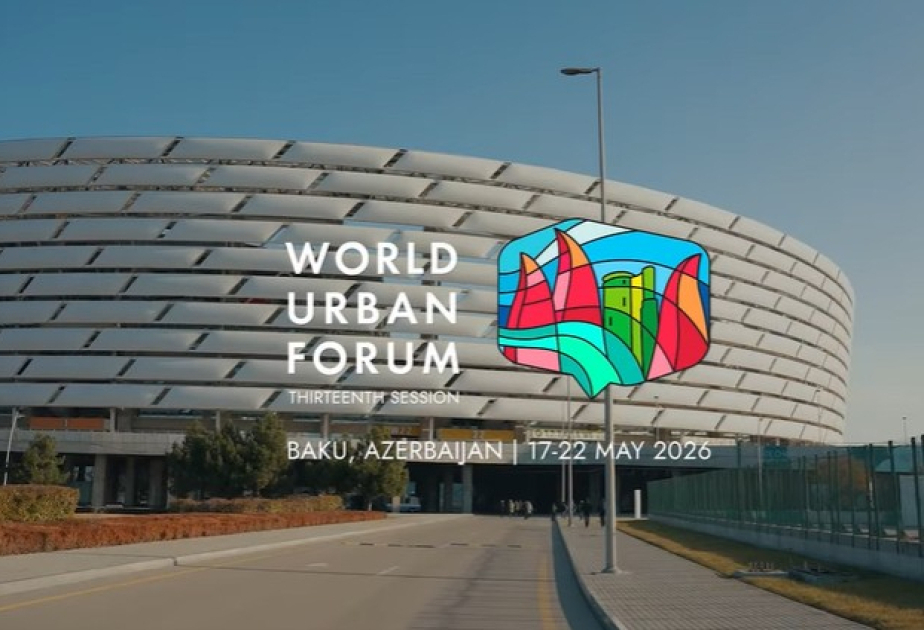
WUF13: Another global platform for sustainable cities and secure future
The World Urban Forum (WUF) is a high-level conference dedicated to addressing the critical challenges posed by global—and often unplanned0—urban growth, climate change, and the rising inequalities driven by urbanization.
This platform was established by the United Nations (UN) in 2001 to examine one of the most pressing issues of the modern era: rapid urbanization and its profound impact on communities, cities, nations, climate change, and public policy. The World Urban Forum is organized and managed by the United Nations Human Settlements Programme (UN-Habitat). The inaugural forum took place in 2002 in Nairobi, Kenya, where the organization is headquartered.
UN-Habitat was established in 1977 following the first United Nations Conference on Human Settlements and Sustainable Urban Development (Habitat I), held in Vancouver, Canada. The organization is mandated to promote socially and environmentally sustainable towns and cities, with the ultimate goal of providing adequate shelter for all. It fulfills this mandate as outlined in the Habitat Agenda, adopted at the UN Conference on Human Settlements (Habitat II) in Istanbul in 1996.
Sustainable development goals and urban planning
Acknowledging that more than half of the world’s population resides in cities, urban development was formally integrated into the Sustainable Development Goals (SDGs) as Goal 11. This goal aims to make cities and human settlements inclusive, safe, resilient, and sustainable by the year 2030.
Cities currently face rising levels of poverty, social inequality, and environmental challenges. With rapid urbanization projected to result in the majority of the global population living in urban areas by 2050, this growth exerts significant pressure on urban infrastructure, housing, and public services. Consequently, issues such as the expansion of slums, air pollution, and haphazard urban sprawl have become critical concerns.
The core mission of SDG 11 is to foster more inclusive, secure, and sustainable cities. According to its first target, by 2030, all people must be ensured access to safe, adequate, and affordable housing and basic services, alongside improved infrastructure. The second target focuses on establishing safe, accessible, and sustainable transport systems for all, with a particular emphasis on the development of public transit. The third target emphasizes strengthening inclusive urbanization and implementing urban planning based on participatory and sustainable development principles. The fourth target aims to enhance the protection and preservation of the world’s cultural and natural heritage.
The fifth target seeks to minimize fatalities and casualties resulting from natural disasters while reducing economic losses. The sixth target focuses on mitigating the negative environmental impacts of cities, specifically by improving air quality and ensuring effective waste management. The seventh target envisions the creation of safe, accessible, and inclusive green and public spaces for all. Furthermore, a key priority is the reinforcement of economic, social, and environmental links between urban and rural areas.
Additional targets encompass the implementation of policies geared toward climate change adaptation, increasing disaster resilience, and providing support to developing nations for sustainable construction. Collectively, these goals serve to transform cities into healthier, safer, and more livable environments, representing a cornerstone of global sustainable development.
The New Urban Agenda (NUA)
At a conference held in 2016 in Quito, Ecuador, world leaders adopted the New Urban Agenda, which establishes new global standards for sustainable urban development and provides a framework for re-envisioning how cities are planned and managed. The New Urban Agenda serves as a strategic roadmap for building cities that function as advanced centers of cultural and social well-being. Furthermore, it outlines the specific pathways for achieving the Sustainable Development Goals and provides a foundation for climate change mitigation and adaptation.
In short, the New Urban Agenda advocates for compact and smart cities, green public transportation, and accessible services for all citizens.
The World Urban Forum and Azerbaijan
On December 22, 2023, the “Host Country Agreement between the Government of the Republic of Azerbaijan and the United Nations for the 13th session of the World Urban Forum in Baku in 2026” was signed. This agreement was officially approved by the President of Azerbaijan, Ilham Aliyev, in March 2024. Following this, on April 25, 2025, Anar Guliyev, Chairman of the State Committee on Urban Planning and Architecture, was appointed National Coordinator for WUF13, and the Organizing Committee was established on June 5 of the same year.
WUF13 is scheduled to take place in Baku from May 17 to 22 of this year. The central theme of the forum is ” Housing the world: Safe and resilient cities and communities.” The event will bring together high-ranking government officials, representatives of international organizations, and leading experts in the fields of architecture and urban planning.
The World Urban Forum is widely regarded as the second most significant and strategically vital global platform within the United Nations system, following only the COP (Conference of the Parties to the UN Framework Convention on Climate Change). Organizing this event in Baku demonstrates Azerbaijan’s burgeoning leadership in urban planning, sustainability, and environmental stewardship, not only on a regional level but on the global stage.
Hosting the Forum provides a unique opportunity for international recognition of the large-scale urban development and territorial restoration projects Azerbaijan has undertaken in recent years. WUF13 serves as a testament to the deepening cooperation between the country and UN-Habitat, as well as Azerbaijan’s increasingly influential role in global urban processes. For Azerbaijan, this Forum is more than just a showcase of national achievements; it is a critical platform for forging new international partnerships. These collaborations will prove essential in addressing future challenges related to global climate change, urban management, and the broader goals of sustainable development.